
How to perform Hajj
The fifth pillar of Islam — a day-by-day walk through the rites from the 8th to the 13th of Dhul-Hijjah.
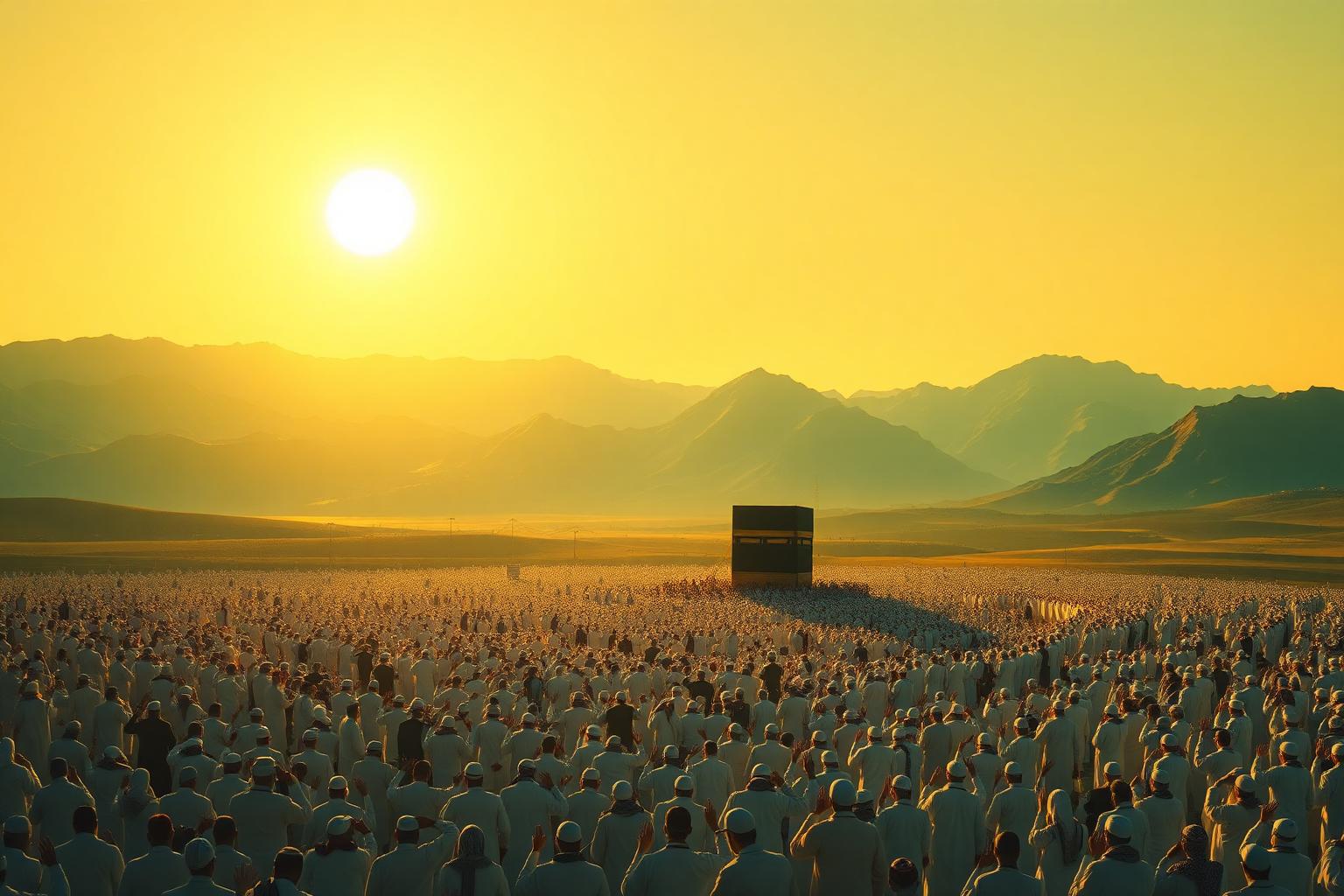
Countdown to Hajj 1448 AH
Sunday, May 16, 2027
Estimated 8 Dhul-Hijjah — subject to local moon sighting.
Why Hajj matters
وَأَذِّن فِي النَّاسِ بِالْحَجِّ يَأْتُوكَ رِجَالًا وَعَلَىٰ كُلِّ ضَامِرٍ يَأْتِينَ مِن كُلِّ فَجٍّ عَمِيقٍ
Wa aḏḏin fi-n-nāsi bi-l-ḥajji yaʾtūka rijālan wa ʿalā kulli ḍāmirin yaʾtīna min kulli fajjin ʿamīq.
"And proclaim to the people the Hajj; they will come to you on foot and on every lean camel, coming from every distant pass." (Qurʾan 22:27)
A pillar of Islam
Hajj is one of the five pillars of Islam. Allah says: 'And Hajj to the House is a duty upon mankind for Allah, for whoever is able to find a way there.' (Qurʾan 3:97)
A journey of surrender
In ihram every pilgrim wears the same simple cloth, removing distinctions of wealth, status, and nationality. It is a living reminder that all Muslims stand equal before Allah.
Following the Prophets
Hajj retraces the legacy of Ibrahim, Ismail, Hajar, and Muhammad ﷺ. Every rite — from tawaf to saʿi and the standing at Arafah — carries centuries of prophetic devotion.
Forgiveness and renewal
The Prophet ﷺ said: 'Whoever performs Hajj and does not commit rafath or fusūq, returns like the day his mother bore him.' (Bukhari & Muslim)
Conditions of Hajj
- Being Muslim, of sound mind and mature (bāligh)
- Physical ability to travel and perform the rites
- Financial ability — lawful (halal) wealth and safe transport
- A mahram for women (per the majority view)
- Sincere intention (niyyah) for the sake of Allah alone
Before you leave
- Learn the rites before you travel — knowledge prevents mistakes
- Settle debts and leave enough provision for dependents at home
- Write a will if recommended in your circumstances
- Pack ihram clothing, unscented soap, and comfortable footwear
- Make sincere tawbah and intend the Hajj as a spiritual reset
The four pillars (arkān) of Hajj
- Ihram — entering the sacred state with intention
- Wuquf at Arafah — standing on the plain of Arafah on 9 Dhul-Hijjah
- Tawaf al-Ifāḍah — the tawaf of pouring forth around the Kaʿbah
- Sa'i — seven laps between Safa and Marwah
Restrictions while in Ihram
- Cutting hair or clipping nails
- Using perfume or scented products
- Marriage contracts and marital relations
- Hunting land game
- Men: covering the head or wearing sewn clothing
- Women: covering the face or wearing gloves
These restrictions apply from the moment you enter ihram until the first tahallul (shaving or shortening the hair) on 10 Dhul-Hijjah.
Day-by-day
8 Dhul-Hijjah — Yawm at-Tarwiyah
Enter Ihram and travel to Mina
لَبَّيْكَ اللَّهُمَّ حَجًّا
Labbayka Allāhumma ḥajjā
"Here I am, O Allah, for Hajj."
Perform ghusl, wear the ihram, make the intention for Hajj, then travel to Mina. Pray Ẓuhr, ʿAṣr, Maghrib, ʿIshāʾ and Fajr in Mina — each at its own time, shortened but not combined. Recite the Talbiyah throughout.
9 Dhul-Hijjah — Yawm ʿArafah
The standing at Arafah
لَا إِلَٰهَ إِلَّا اللَّهُ وَحْدَهُ لَا شَرِيكَ لَهُ، لَهُ الْمُلْكُ وَلَهُ الْحَمْدُ وَهُوَ عَلَىٰ كُلِّ شَيْءٍ قَدِيرٌ
Lā ilāha illa-llāh waḥdahu lā sharīka lah, lahu-l-mulku wa lahu-l-ḥamd, wa huwa ʿalā kulli shayʾin qadīr
"There is no god but Allah, alone with no partner. To Him belong the dominion and all praise, and He has power over all things."
After Fajr in Mina, travel to Arafah. Pray Ẓuhr and ʿAṣr combined and shortened at Ẓuhr's time. Then stand in humble supplication until sunset — this is the essence of Hajj. After sunset travel to Muzdalifah; pray Maghrib and ʿIshāʾ combined there and spend the night. Collect small pebbles for the next day.
Sunnah: The best dua of the Day of Arafah is the one above, as taught by the Prophet ﷺ.
10 Dhul-Hijjah — Yawm an-Naḥr (Eid al-Adha)
Stoning, sacrifice, shaving, tawaf al-ifāḍah
After Fajr in Muzdalifah, go to Mina. Perform four rites, ideally in this order: (1) throw seven pebbles at Jamrat al-ʿAqabah, (2) offer the sacrifice (hady), (3) shave or shorten the hair — first tahallul, (4) travel to Mecca for Tawaf al-Ifāḍah and Saʿi. Then return to Mina.
Sunnah: Say 'Bismillāh, Allāhu akbar' with each pebble thrown.
11 Dhul-Hijjah — Ayyām at-Tashrīq
Stone all three pillars in Mina
After Ẓuhr, stone Jamrat al-Ṣughrā (small), then al-Wusṭā (middle), then al-ʿAqabah (large) — seven pebbles each, saying takbir with each throw. Make dua after the first two. Spend the night in Mina.
12 Dhul-Hijjah — Ayyām at-Tashrīq
Stone the three pillars again
Repeat the stoning of the three pillars in the same order after Ẓuhr. Pilgrims wishing to hasten (taʿajjul) may leave Mina before sunset. Those who stay complete the third day.
13 Dhul-Hijjah — optional
Final stoning, then Tawaf al-Wadāʿ
For those who stayed, stone the three pillars a final time after Ẓuhr. Then return to Mecca and, before leaving the city, perform Tawaf al-Wadāʿ — the farewell tawaf — as the last act of Hajj.
After Hajj
- Keep the spirit of tawbah and humility alive when you return home
- Avoid major sins so your Hajj remains accepted (mabrūr)
- Share your experience with family and friends in a way that inspires, not boasts
- Maintain patience, kindness, and prayer — the real fruit of Hajj
A dua for the accepted Hajj
اللَّهُمَّ اجْعَلْهُ حَجًّا مَبْرُورًا، وَسَعْيًا مَشْكُورًا، وَذَنْبًا مَغْفُورًا
Allāhumma-jʿalhu ḥajjan mabrūran, wa saʿyan mashkūran, wa dhanban maghfūrā.
"O Allah, make it an accepted Hajj, an appreciated effort, and a forgiven sin."
Guidance is based on mainstream Sunni fiqh. Consult a qualified scholar for madhhab-specific rulings.